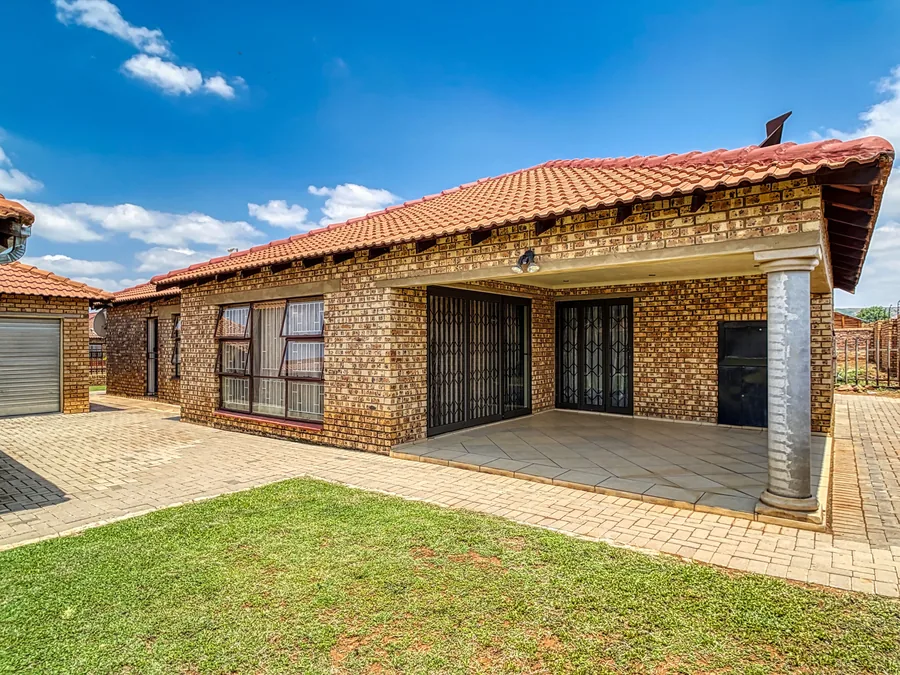
Hail damage to a roof in Johannesburg is a matter of when, not if. The city’s height above sea level and its summer storm pattern mean that most years, somewhere between Midrand and Randburg, a storm will drop hail large enough to break tiles and dent sheeting. If it is your street this time, here is what to do, in order.
1. Keep Everyone Safe
Do not go up a ladder or onto the roof while the storm is passing or while the roof is wet. Broken tiles slide, dented sheets are slippery, and there may be loose pieces ready to fall. Keep children and pets away from areas below damaged eaves.
2. Stop Water Doing More Damage Inside
- If water is near light fittings, switch off that circuit at the distribution board.
- Put buckets and towels under drips and move furniture, electronics and documents.
- If a ceiling board is sagging with water, keep clear of it; it can give way without warning.
3. Photograph Everything, With Dates
Your phone camera is the most useful tool you have. From the ground and from upstairs windows, photograph:
- Broken or missing tiles, and fragments on the ground or in gutters.
- Dents, splits or lifted edges on IBR or corrugated sheeting.
- Flattened or split gutters and downpipes knocked loose.
- Hailstones themselves, next to a coin or ruler for scale, if you can do so safely.
- Every stain, drip and wet patch inside.
Take more photos than you think you need. They help your insurer and your roofer.
4. Tell Your Insurer
Report the damage promptly; most policies have time limits. Ask what they need from you: many insurers want photos, a roofer’s report and an itemised quote, and some send their own assessor. Keep a note of your claim number. Whether a claim is accepted is the insurer’s decision, and it depends on your policy wording.
5. Arrange a Roof Inspection
Some hail damage is obvious. A lot is not: hairline cracks in concrete tiles, chipped ridge cappings and small splits at screw holes may only leak weeks later. A proper inspection from the roof, and from the roof space where possible, finds what you cannot see from the ground.
What an Itemised Repair Quote Should Show
- Photos of the damage before any repair.
- The number of tiles or sheets to be replaced, and their profile.
- Ridge, hip, valley and flashing repairs, listed separately.
- Gutter and downpipe work.
- Any make-safe work already done, priced on its own line.
- Older wear and tear identified separately from fresh storm damage.
- Access equipment for steep or double-storey roofs.
A quote laid out like this is easier for you and your insurer to follow, and it avoids arguments later about what was storm damage and what was not.
Make-Safe Now, Permanent Repair Later
After a big storm, roofers are busy and matching tiles can run short. A temporary fix that stops water getting in is often the first step, followed by the permanent repair once materials are available. Expect these to be priced separately.
If You Live in a Complex
Roofs in sectional-title schemes are usually common property, so report damage to the managing agent or trustees as well as your own household insurer if your contents are affected. Our guide for trustees explains how repairs are typically planned.
For the repairs themselves, see storm damage repairs. We work across Sandton, Bryanston and the rest of northern Johannesburg.